It’s 6:02am and the whiteboard says 5 × 5 at 75%. In front of you, one member slept four hours next to a teething toddler, another ran a half marathon on Sunday, and a third is quietly having the best week of her year. The percentage is identical for all three of them, and that’s exactly the problem.
Why percentages break at 6am
Percentage-based programs assume two things: that everyone knows their one-rep max, and that it holds steady from day to day. In a group class, neither is true. Most members have never tested a max, and the ones who have tested it on a good day, under different conditions, months ago.
Sleep is the obvious variable, and the research is more nuanced than “bad night, bad session.” A 2022 meta-analysis in Sports Medicine pooled 69 studies and found sleep loss cut performance by about 7.6% on average. Morning tasks were largely spared, but losing sleep at the end of the night, by waking early, produced consistent drops.
Waking early is precisely what a 6am alarm does to anyone who went to bed late. So some of your early crew will be fine and some will be quietly flat, and you can’t tell which from the front of the room. You need a system that lets each person find the right load for that morning while the class stays on one clock.
One scale, anchored in reps in reserve
Pick one effort scale and never change it. The version that works best in groups ties a 1–10 rating to reps in reserve (RIR), meaning how many more clean reps you could have done when you racked the weight.
- RPE 10: nothing left. Another rep would have failed or broken form.
- RPE 9: one more clean rep in the tank.
- RPE 8: two more. The last reps slowed down but stayed crisp.
- RPE 7: three more. Hard work, but you could chat afterward.
- RPE 6 and below: warm-up territory.
Will members rate it perfectly? No, and neither will your advanced lifters. A meta-analysis of 12 studies and 414 participants found people underpredicted their reps to failure by roughly one rep on average. Accuracy improved closer to failure and with heavier loads (sets of 12 reps or fewer), and training experience made surprisingly little difference.
That gives you three practical rules. Use RPE on sets of 3–10 reps, not 20-rep burnouts. Ask for the rating at the end of the set, not before it. And accept an error of about one rep as normal, not as a coaching failure.
- Green: slept well and feeling sharp, so work up to the top of the target, usually RPE 8.
- Amber: short night or sore, so stay at the bottom of the target, RPE 7, same sets.
- Red: rough night or feeling run down, so cap at RPE 6–7 and drop the final set.
Program targets, not weights
Write the effort on the board, not the load: “Goblet squat 3 × 8 @ RPE 7–8.” Members pick their own dumbbell; your job is to referee the gap between the target and what you see.
Make the first working set exploratory and give people a simple adjustment rule. If the set came in one point off target, move one dumbbell jump (around 5%). If it was two or more points off, move two jumps. For the final set, anyone who overshot to RPE 9 or above simply holds the weight rather than adding more.

The evidence for this approach is encouraging, if not final. A 2025 network meta-analysis found that autoregulated methods, RPE among them, outperformed fixed-percentage programs for maximal strength. It’s one analysis, and none of it was run in a crowded 6am studio, but it points the same way as the coaching floor does.
How hard is hard enough?
Here’s where autoregulation gets misunderstood. It isn’t a license to go easy, and it isn’t a dare to grind every set to failure either.
A 2024 series of meta-regressions found strength gains were broadly similar across a wide range of reps in reserve, while muscle growth improved as sets ended closer to failure. And the American College of Sports Medicine’s 2026 resistance training position stand says training to momentary failure isn’t strictly necessary for general health and fitness.
For a mixed group, that points to a sensible default: RPE 7–8 on big, technical lifts like squats, hinges and presses, and RPE 8–9 on machines, carries and single-joint work where a missed rep is harmless. Save RPE 10 for the rare test day, with spotters and a plan.
The board sets the effort. The member picks the weight. The coach referees the gap.
What most coaches get wrong
The biggest mistake is announcing RPE once and never teaching it. “How did that feel?” is not a calibration tool. “How many more could you have done, honestly?” is. Ask it after every working set for the first month, then spot-check.
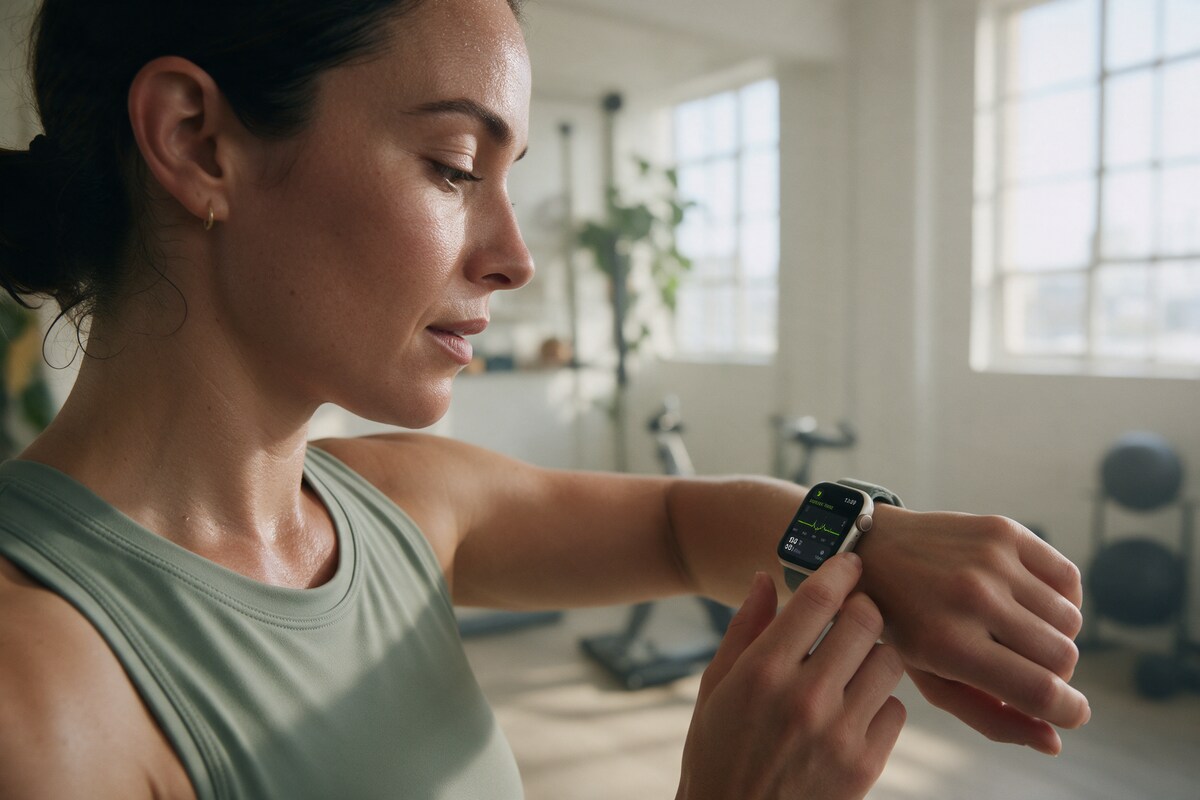
The second is letting a wearable overrule the bar. Wearables top the ACSM’s 2026 fitness trends, and more than 70% of wearable users apply their data to guide training. A low readiness score is a useful hint for setting someone’s cap, but the rep in front of you is the better measure of how they’re doing today.
That’s how we use it. In Mahdofit, members answer a two-question sleep and soreness check-in before class, so you walk in knowing who is likely amber. Then their logged RPE tells you whether the guess was right, and next week’s suggested loads start from what actually happened.
Teaching it in four weeks
You don’t need a seminar. You need the same cue, repeated, until members can rate a set without thinking about it.
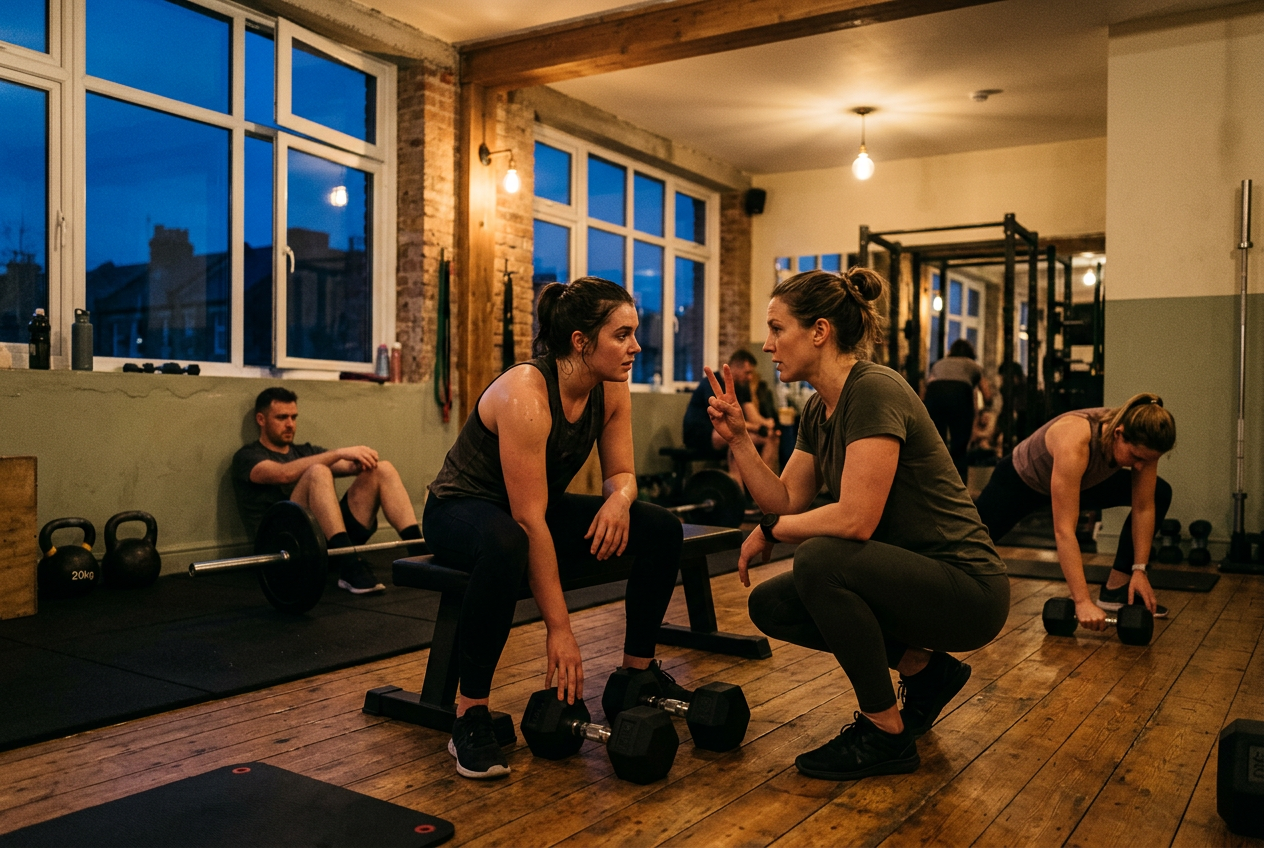
In week one, use the scale on one lift only and say it the same way every time: “Pick a weight you could do ten times. Do eight. If the last two slowed down but stayed clean, that’s a seven or eight.” In week two, have members say their number out loud after each set. In week three, add the adjustment rule. In week four, put the green, amber and red tiers on the board and let people choose their lane before the warm-up.
By the end of the month, your 6am class should look the same from the doorway, everyone moving on one clock, but each person will be working at the right effort for the morning they actually woke up to.
The short version
- Teach one 1–10 scale tied to reps in reserve and use the same cue every class.
- Write effort targets on the board and let members choose their loads.
- Default to RPE 7–8 on technical lifts and save failure for rare test days.
- Use green, amber and red tiers so short nights change the cap, not the plan.
- Log every rating so next week starts from what really happened.