
In week one, your new member photographs every meal and hits their protein target to the gram. In week three, they message you at 6:40pm: “Had cereal for dinner. I’ve blown it.” The plan didn’t fail because the macros were wrong. It failed because it was built for a person who doesn’t exist.
Most nutrition coaching still optimizes for precision: the ideal split, the perfect timing, a different recipe every night. But for most members, adherence beats precision every time. Here are five rules we’ve learned about building plans people are still following when the novelty wears off.
1. Choose the plan they’ll follow, not the “best” plan
Low-carb, low-fat or plain calorie control: the debate eats hours of coaching time. The evidence keeps pointing somewhere less exciting. In a 2023 study comparing three diet approaches, participants lost about 5 kg over 12–16 weeks with no significant difference between diet types, and simply completing the program explained 20–30% of the variation in weight loss.
The diets did differ in some markers, so type isn’t irrelevant. But for most of your members, the deciding factor is whether they can live with it on a Wednesday.
So start every plan with three questions: “What do you already eat that you like?”, “Which meal is hardest for you?” and “What would you hate to give up?” Build from their answers, then nudge. A plan that starts from their real kitchen needs far less willpower than one that starts from yours.
2. Make repetition a feature, not a failure
Coaches often treat variety as a sign of a good plan. Members often experience it as homework: new recipes, new shopping lists, new decisions every night.
A 2026 analysis of food logs from 112 adults in a 12-week weight loss program found that people who repeated meals more consistently lost about 5.9% of body weight versus 4.3% for those with more varied eating. Each extra 100 calories of day-to-day fluctuation was linked to roughly 0.6% less weight loss. It’s correlational, and motivated people may simply be more routine, but it matches what most coaches see on the ground.
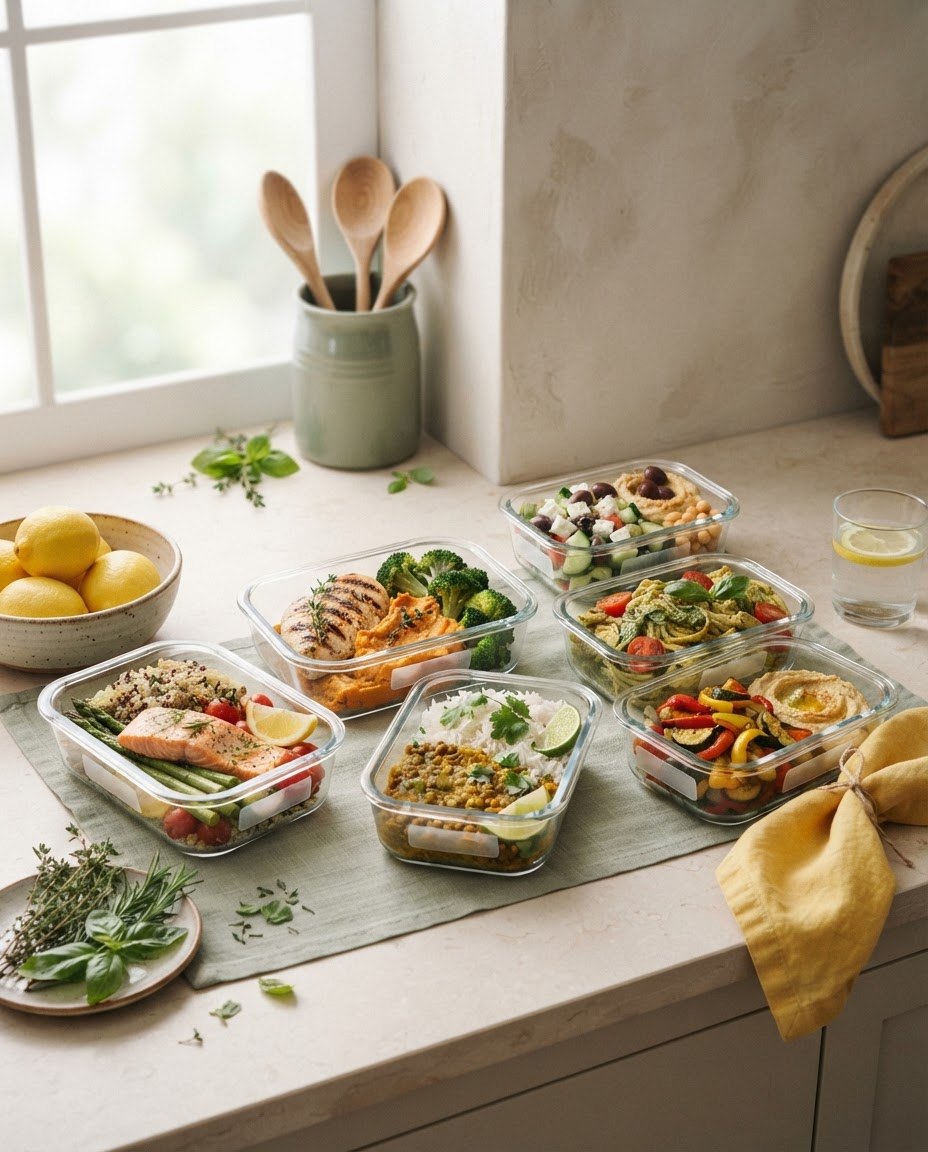
Repetition doesn’t mean eating the same thing forever. It means putting the low-stakes meals on autopilot so energy is saved for the ones that matter. A simple structure we like:
- Breakfast: Two options on rotation. Pick one the night before, done.
- Lunch: Three batch-friendly options, cooked once and eaten twice.
- Dinner: A flexible template (protein + plants + a carb), not a fixed recipe.
3. Anchor protein, flex everything else
If a plan can only get one thing right, make it protein. Members already want this: in a 2025 IFIC survey, 71% of Americans said they were trying to consume protein, while 79% didn’t know or weren’t sure how much they needed. That gap is exactly where a coach earns their fee.
Translate the target into anchors, not grams. “A palm or two of protein at every meal, plus one protein snack” is something a member can do without an app. Let carbs and fats flex around training days, preferences and budget.
This matters even more for members on GLP-1 medications, who may be eating far less than before. A 2025 joint advisory from four lifestyle medicine, nutrition and obesity societies notes that targets of 1.2–1.6 g/kg/day have been proposed during active weight loss, alongside strength training to protect lean mass, and suggests smaller, more frequent meals to help with GI side effects. For these members, a plan of five small, protein-forward eating moments beats three big plates they can’t finish. Coordinate with their prescriber; your job is the food, not the dose.
4. Write the plan for the worst day of the week
Most plans are written for a calm Sunday. Members live through late Thursdays, kids’ birthday parties and airport layovers. If the plan has no answer for those, the member improvises, and improvisation at 8pm usually looks like delivery.
If-then plans help, though honestly, the effect is modest. A 2026 meta-analysis of strictly formulated if-then plans found people ate about a quarter of a portion more fruit and vegetables per day, a small effect that depended on a clear cue, a concrete action and an explicit link between them. Small, but cheap, and it compounds.
Ask each member to name their two hardest moments, then write a script for each: “If I get home after 7, then I eat the freezer chili.” “If there’s a work lunch, then I fill half the plate with protein first.” Keep the “then” boring and available.

5. Shrink the plan at week three instead of restarting it
Engagement fades in a predictable shape. In a 12-month eHealth weight management study, researchers found that only 16% of participants stayed consistently engaged, while 48.5% engaged at first and then declined. Fading is the default, not the exception.
In the plans we see in Mahdofit, the wobble tends to show up around weeks two to four, when check-ins get thinner and logged meals get vaguer. That’s the moment to make the plan smaller, not to give a pep talk. Drop to two non-negotiables, such as the protein anchor and the planned breakfast, and let the rest be “good enough.”
A script that works: “The last two weeks were busy, which is normal. Let’s simplify: protein at every meal and your usual breakfast. That’s the whole plan until things settle.” Members who feel they’ve “blown it” need a smaller target, not a fresh Monday.
What most coaches get wrong
We over-engineer. Macros to the gram, a new recipe every night, rules about timing that matter for elite athletes and barely register for a member training three times a week. Precision feels like expertise, but it raises the cost of every meal.
A plan that’s 80% right and followed beats a plan that’s perfect and abandoned.
We also use all-or-nothing language without noticing. “On plan” and “off plan” teach members that one cereal dinner cancels a good week. Swap it for “most meals” and “anchor meals.” In Mahdofit, coaches can mark which meals are anchors, so a member who nails those three days out of five sees a win, not a failure.
The short version
- Pick the approach the member can live with, and build it from foods they already eat.
- Put breakfast and lunch on a short rotation; save variety for dinner.
- Anchor every meal with protein, and plan smaller, protein-forward meals for members on GLP-1s.
- Write if-then scripts for each member’s two hardest moments of the week.
- When engagement dips around week three, shrink the plan to two non-negotiables instead of restarting.