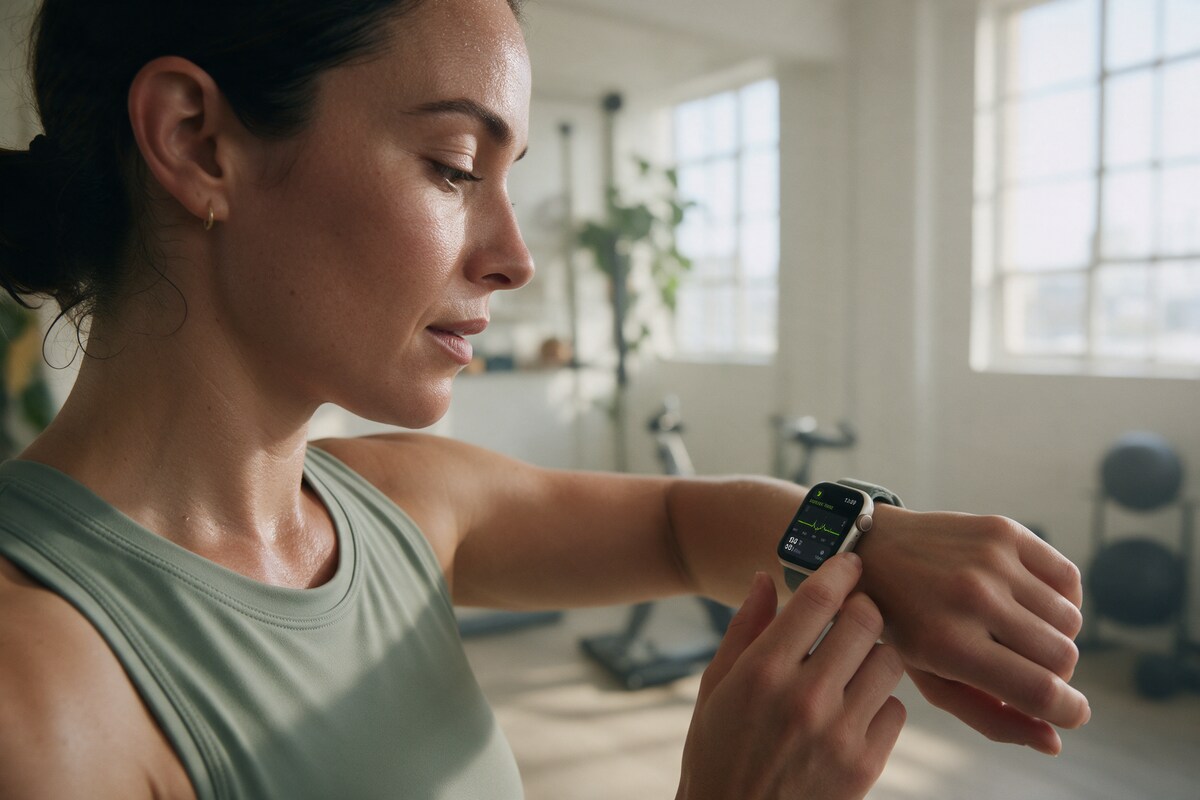
Your member swears she can’t do zone 2 without walking, and her watch backs her up. Most of the time the sensor isn’t the real problem: the zones are. Wrist heart rate is good enough to coach easy cardio, as long as you know the handful of places it reliably drifts.
Picture Dana on the rower at 6:15am, chatting with the member next to her about weekend plans. Her watch says 164 bpm, deep in zone 4. She stops talking, eases off to a crawl, and finishes the session convinced her fitness is worse than it is. Nothing was wrong with her heart. The reading was off, and the zones it was judged against were never hers in the first place.
Zone 2 is a physiology, not a percentage
Before blaming the optical sensor, check what “zone 2” means on the watch. A 2025 expert consensus in the International Journal of Sports Physiology and Performance described zone 2 as intensity just below the first lactate or ventilatory threshold. That is an individual landmark, not a fixed slice of maximum heart rate.
How far apart those landmarks can sit is the uncomfortable part. When Meixner and colleagues tested 50 cyclists, the common ways of defining zone 2 varied between people, with coefficients of variation from 6% to 29%. Ventilatory threshold and maximal fat oxidation lined up well; standardized heart rate percentages did not.
Now stack an age-predicted max on top. Unless someone edits them, zones built from a formula can sit well above or below a given member’s true threshold. Two people with the same birthday can have easy paces that land ten or more beats apart, and the watch will color both of them the same.
Where the wrist holds up
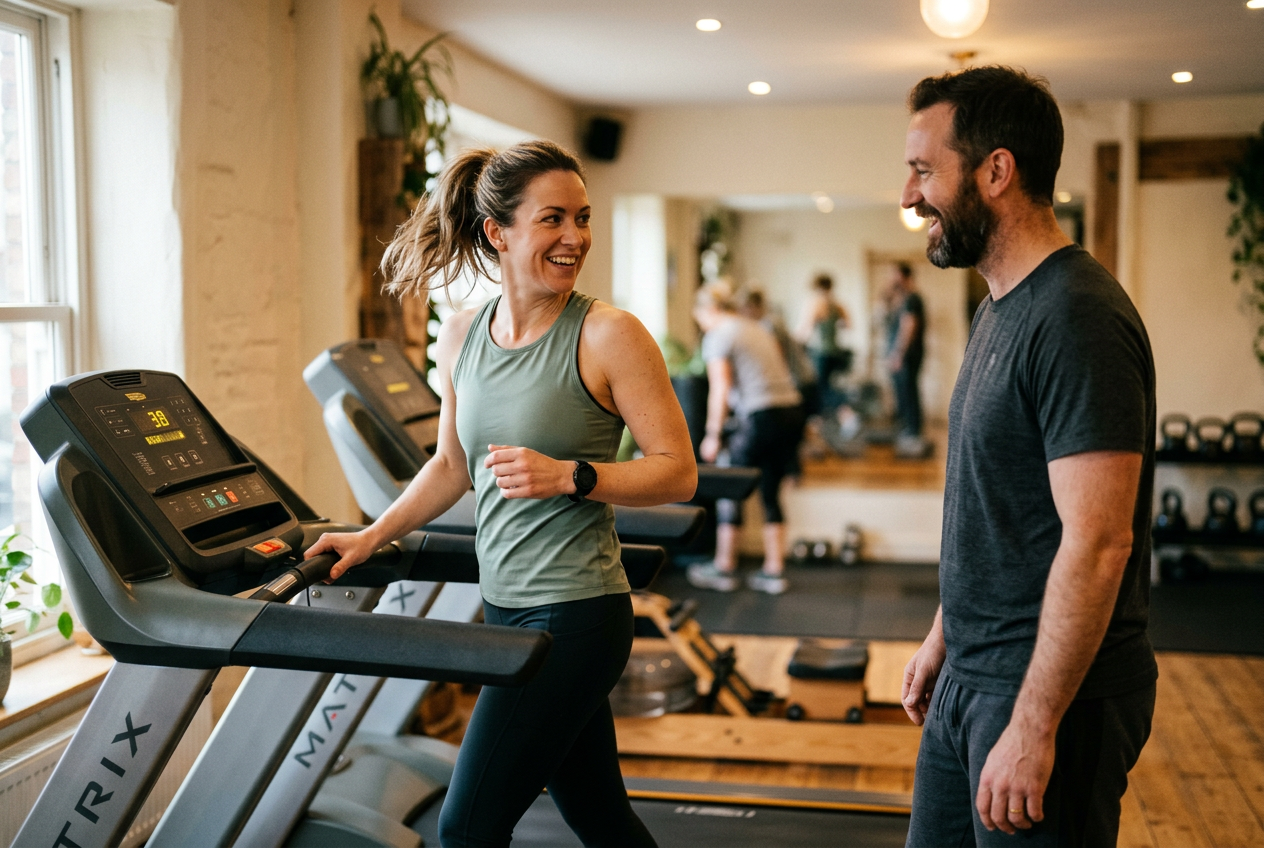
Here is the good news. A 2024 umbrella review in Sports Medicine, pooling 24 systematic reviews, reported wrist-worn heart rate errors of roughly ±3% across the major brands. On a 135 bpm easy run, that’s about four beats either way, which is tighter than most zone 2 ranges.
The conditions zone 2 lives in are exactly where optical sensors do best: steady effort, rhythmic movement, a heart rate that changes slowly. Think steady treadmill or road running, incline walking, and easy cycling with a relaxed grip. In a 40-minute conversational session, the middle 30 minutes are usually trustworthy enough to coach from.
The same review carries a caveat worth repeating to members. Across 310 devices, only a small fraction of the health metrics they display had been validated at all. “Accurate” applies to heart rate at steady effort, not to every number on the screen.
Where it drifts
The first ten minutes
Optical sensors lag when intensity changes quickly. In a 2025 study comparing a Garmin watch with a Polar H10 chest strap, the largest gap, close to 11 bpm, showed up in the first ramp from rest, with the watch trailing the strap. Once effort settled, the bias shrank. Warm-up readings are a poor basis for any decision.
Grip, wrist flex and impact
Rowing, ropes, kettlebells and burpees all tense forearm tendons or jolt the wrist. In a 2026 Sensors study on sensor placement, even the best optical setup missed by about 12% during burpees, while a forearm-worn sensor stayed under 2% on the treadmill. Upper-arm and forearm positions beat the wrist overall.
Fit and skin tone
A loose strap is the most common culprit we see; for cardio, wear it snug and a finger-width or two above the wrist bone. Skin tone evidence is mixed. The Garmin study above found no significant overall effect, but a 2025 PLOS ONE study of a Fitbit Charge 5 found errors near 12 bpm above 60% of heart rate reserve for medium and darker skin tones, versus about 4 bpm for lighter skin.
- Trust: steady runs, incline walks and easy rides, from minute ten onward.
- Verify: rowing, cold mornings, loose straps, anything with a hard grip.
- Ignore: warm-up spikes, short intervals, burpees and ball slams.
What most coaches get wrong
The usual mistake is treating the zone ceiling as a wall. A member drifts three beats over on a hill, the watch buzzes, and they walk. Easy cardio works because it is easy and repeatable, not because every minute sits inside a colored band.
The second mistake is ignoring drift. Over a long steady session, heart rate tends to creep upward at the same pace, more so in a warm room. That isn’t sensor error. Ease off a little if the talk test gets harder, and don’t read a late rise as a failed session.
The third is fixing the data instead of the zones. Coaches buy chest straps for everyone while the zones are still built on a birthday. For group zone 2, a strap is a nice-to-have. Save it for intervals and testing, where lag and grip errors actually change the answer.
Coach the conversation first. The watch is there to keep it honest, not to overrule it.
Set the ceiling with a talk test
The cheapest calibration tool is a conversation. A systematic review of the talk test found that the last stage where people could still speak comfortably matched the first ventilatory threshold for workload, oxygen uptake and heart rate. Most participants were cardiac patients and protocols varied, so treat it as a good-enough anchor rather than a lab test.
- Warm up for ten minutes on a treadmill or bike, ignoring the watch.
- Raise speed or incline every three minutes. In the final 30 seconds of each stage, have the member read a short paragraph out loud.
- Note the last stage where reading is comfortable, with no gasping between sentences. Average the watch heart rate over that stage’s final minute.
- Use that number as the zone 2 ceiling and the ten beats below it as the working range.
- Retest every eight to twelve weeks, or after a long break.
Once the ceiling is set, the watch earns its keep. It holds the member honest on days when easy feels hard, and it shows week-over-week progress as the same pace costs fewer beats. In Mahdofit, synced sessions from Apple Health, Garmin or Whoop sit next to the member’s sleep and soreness check-in, so a “too high” easy run after a five-hour night reads as context, not failure.
Scripts for the member who thinks the watch is broken
When the number and the feeling disagree, give the member a rule, not a lecture. Try: “If you can talk in full sentences, you’re in zone 2, whatever the watch says. If you can’t, slow down, whatever the watch says.”
For the rower or bike-erg regular: “Your wrist is working hard on the handle, so the watch is guessing. Let’s use the talk test here and check the number on your next run.” For the early-session panic: “Ignore the first ten minutes. Your watch is still catching up with you.”
And for the data lover who wants precision, offer an upgrade path rather than a debate. An armband or chest strap paired to the same watch sidesteps most of the wrist problems above, and it’s a one-off purchase, not a new habit.
The short version
- Build zone 2 from a talk test, not an age formula; most “bad data” is really bad zones.
- Trust wrist heart rate on steady runs, walks and easy rides after the first ten minutes.
- Distrust it on rowers, grip-heavy work, cold mornings and anything explosive.
- Treat the ceiling as a guide, expect some upward drift in long or warm sessions, and keep the conversation test as the tiebreaker.
- Reserve chest straps or armbands for intervals, testing and members who want precision.